gtbuy Shoe Size Check by Foot Measurements
gtbuy Shoe Size Check by Foot Measurements
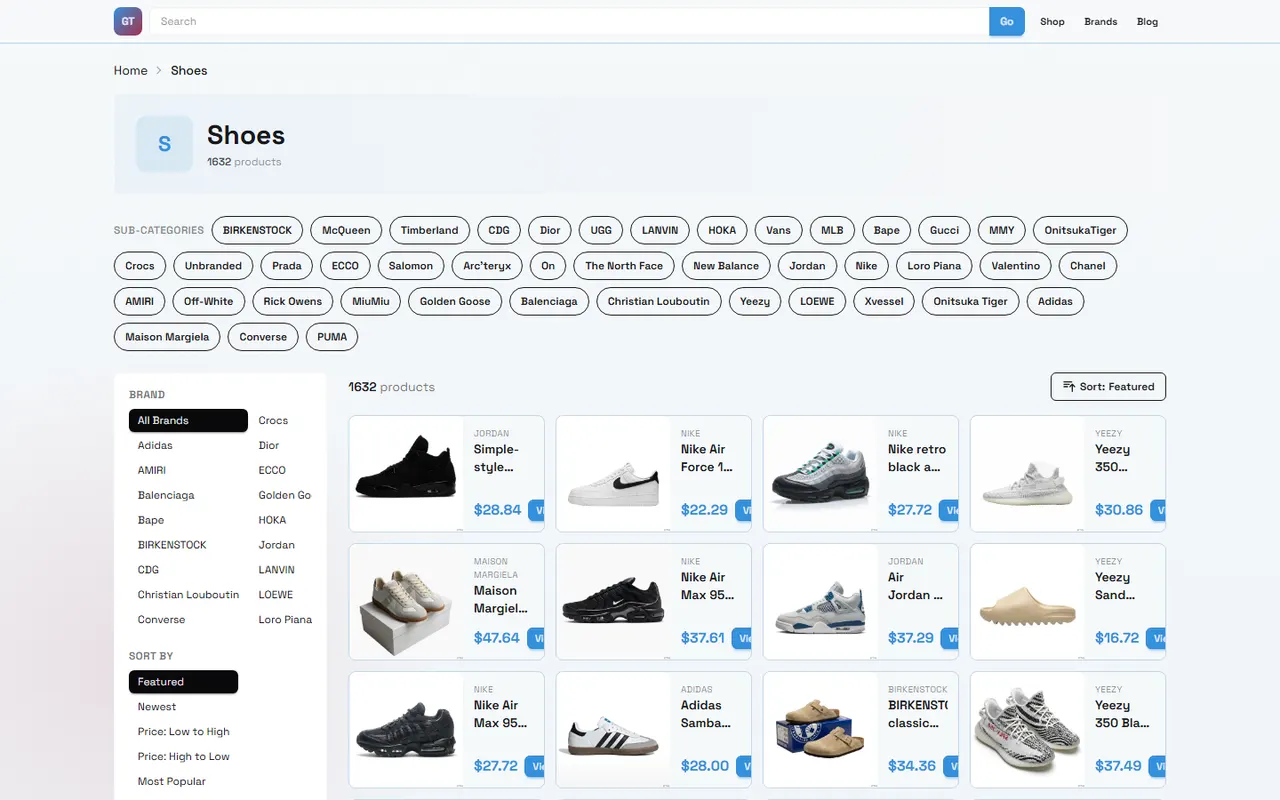
gtbuy Shoe Size Check by Foot Measurements: From Foot Length and Width to Size Chart for Purchase Decisions
First clarify the sizing risks you need to address
When buying sneakers on gt-buy.net, the first thing to address is not "what size do I usually wear," but whether the sizing information on the product page is sufficient to support a relatively safe judgment. The insole length, toe box shape, forefoot width, upper wrapping method, and different sizing systems of sneakers may cause the same person to need different choices in different shoe models.
This guide is for those who are preparing to buy sneakers but are unsure how to check foot shape and size. After reading, you should be able to complete a pre-purchase review: measure both feet, record foot length and width, read the product size chart, and determine whether the page information is sufficient. It is not a substitute for brand official fitting advice or medical foot assessment, nor can it guarantee a fit when the product page lacks key data.
When viewing specific products on gt-buy.net, you should rely on the current product page's displayed name, size chart, available sizes, seller information, and purchase process. The above information may change with the product or page updates, so you should re-check before submitting an order.
Measure foot length, foot width, and differences between left and right feet
It is recommended to measure when your feet are relatively relaxed during the day, and wear the socks you plan to pair with the sneakers. Prepare a piece of paper, a pen, and a ruler or tape measure. Measure left and right feet separately, not just one foot.
Measurement steps:
Place the paper against a wall, and stand with your heel lightly touching the wall.
Keep your body standing naturally, with weight evenly distributed on both feet.
Ask another person to mark the position of the longest toe. If doing it yourself, try to remain standing and avoid measuring while sitting.
Measure from the wall end of the paper to the marked point, and record the foot length.
Measure the widest part of the forefoot, and record the foot width.
Record left and right feet separately, and do not take an average instead of using the larger foot.
If the left and right feet have different lengths, you should generally base the size judgment on the longer foot first, then check whether the wider foot might be restricted by the toe box or upper. If the length difference is noticeable and the page lacks information on insole length, shoe width, or toe box shape, the sizing risk increases.
You can use this format when recording results:
Left foot: foot length, foot width
Right foot: foot length, foot width
Judgment basis: longer foot or wider foot
Wearing conditions: thin socks, regular socks, or thick socks
Usage scenario: daily walking, training, running, or prolonged standing
📏 Measurements must use the same unit as the product size chart. Centimeters, millimeters, and inches cannot be mixed; if the page does not specify units, confirm first before converting.
Compare with the product size chart instead of just usual size
"I usually wear a certain size" can only be a preliminary reference and cannot replace the product size chart. There may be differences between different brands, shoe types, and sizing systems, even if the same number is marked, the actual fit range may not be the same.
On the product page, prioritize finding the following information:
Sizing system, such as Chinese size, European size, UK size, or US size
Corresponding foot length or shoe insole length
Whether foot width data is provided
Which model or group of products the size chart applies to
Whether available sizes correspond exactly to the size chart
Whether the page indicates the shoe runs large, small, or true to size
Whether there are additional seller notes
When comparing, first confirm your longer foot length, then observe the coverage range of adjacent sizes. If your measurement falls exactly between two sizes, do not only look at the numbers; also consider toe room, sock thickness, and usage scenario. Running or prolonged activities usually require more attention to front clearance than short-term try-on, but specific clearance should still be based on shoe type and product information, and you cannot apply a fixed number that works for all shoe models.
Creating a simple check record can reduce repetitive judgments:
Check item | Information to record | Purpose of judgment |
|---|---|---|
Longer foot length | Actual measurement and unit | Determine basic size range |
Wider foot width | Actual measurement and unit | Determine if forefoot may be restricted |
Product sizing system | Clearly stated on page | Prevent confusion between systems |
Corresponding size data | Foot length, insole length, or other notes | Compare with actual measurement |
Usage scenario | Daily, training, or prolonged activity | Determine clearance needs |
If the product page only has size numbers without any corresponding length, width, or fit notes, you should mark the judgment as low certainty, not treat your usual size as a definite answer.
Check toe box space and forefoot clearance
Matching foot length does not mean the entire shoe will fit. Toe box height, toe box width, forefoot shape, and upper material all affect actual wearing comfort. The page usually does not provide complete last shape data, so you need to record visible information and uncertain parts separately.
Focus on the following questions:
Is the toe box narrow, round, wide, or not stated on the page
Can product photos show the toe box outline, but do not treat visual observation as precise dimensions
Is there clear indication of upper elasticity, fixed structure, or hard overlay
Is the sole or shoe body suitable for scenarios requiring greater movement
Does the page explicitly state suitability for wide or narrow feet
Are there different colorways, versions, or sellers causing inconsistent sizing information
Do not judge material softness, actual wrapping feel, or wearing comfort solely from product images. Images can help identify shoe type and structure, but cannot replace size charts, seller notes, or actual measurement data.
If you are sensitive to foot width, instep height, or toe movement space, you should prioritize products with more complete page information. For models where the page does not provide shoe width, last shape, or fit tips, you should include the "unconfirmable parts" in the risk before purchasing, rather than filling the gap with subjective guesses.
Check for missing last shape and sizing information on the page
After an initial review of the product page on gt-buy.net, you can check the completeness of information in the following order:
Is the product name clear and consistent with the current shoe model?
Are the sizes in the options actually selectable, not just numbers in images or titles?
Does the size chart correspond to the current product?
Are the units and sizing system in the size chart clear?
Does the page state shoe width, last shape, toe box, or applicable foot type?
Is seller information clear, and are there multiple versions or different shipping options?
Does the page state restrictions related to ordering, warehouse inspection, returns, or after-sales?
Is the page information still consistent before submitting the order?
Do not write the size judgment as a definite conclusion when the product page has the following situations:
Size chart missing or unreadable
Size numbers cannot be matched with the size chart
Units not specified
Product title, images, and options seem to be different models
Only vague descriptions like "true to size" or "runs large" without applicable conditions
Page lacks seller or version information
Key purchase and after-sales conditions cannot be confirmed
These situations do not necessarily mean the product cannot be purchased, but they mean you need to fill in information first, or choose a product with more complete information. If there is a consultation channel on the page, you can ask specific questions around your measured foot length, foot width, target sizing system, and usage scenario, and keep the seller's reply for later verification.
Create a foot shape and size check list before ordering
Before ordering, you can use a checklist for final review:
[] Both feet have been measured
[] Data for longer foot and wider foot recorded
[] All data uses the same unit
[] Product sizing system confirmed
[] Size chart for the current product viewed
[] Measured foot length compared with size chart data
[] Sock thickness and usage scenario considered
[] Toe box, shoe width, or last shape notes checked
[] Page facts, image observations, and unconfirmable information distinguished
[] Available sizes confirmed to match current product
[] Conditions related to warehouse inspection, returns, or after-sales after ordering understood
[] Page information re-checked before submitting order
If you purchase through gt-buy.net, the product selection, order submission, warehouse inspection, and subsequent shipping steps in the platform process should be checked separately. Do not interpret warehouse inspection photos as a replacement for trying on; photos can help check appearance, size markings, or obvious issues, but usually cannot confirm the space and comfort when worn.
When to postpone purchase due to insufficient information
The following situations are more suitable for postponing the order:
Your foot length falls exactly between two sizes, but the page lacks insole length or fit range
Your foot width is noticeable, and the product has no shoe width, last shape, or wide foot description
Left and right feet differ significantly, and the page cannot provide sufficient size details
Product size chart inconsistent with title, options, or seller description
You need the shoe for running, training, or prolonged standing, but the page lacks sufficient shoe type information
You cannot confirm whether the order supports appropriate after-sales handling
You cannot confirm that the current page information is still valid
Postponing a purchase does not mean giving up on the product, but rather first looking for verifiable information. You can re-check the product page, consult the seller, or compare similar products with more complete size descriptions. When there is insufficient evidence, choosing a product with higher information transparency usually makes it easier to control risk than simply pursuing a certain size number.
Complete a pre-purchase size review
Finally, condense the judgment into four questions:
What are the lengths and widths of my left and right feet?
What sizing system does the current product use, and what measurement data does the size chart correspond to?
Do my foot shape, socks, and usage scenario match the toe box and forefoot space?
What other key facts on the page have not been confirmed?
Only when the first three questions have verifiable bases and the fourth question has no major gaps affecting the decision is it appropriate to proceed with the order. If there are still unconfirmable size, last shape, or after-sales conditions, you should clearly note the uncertainty and first supplement information.
The goal of size checking is not to find a number that looks most familiar, but to make the measured foot shape, product size chart, shoe space, and purchase conditions correspond to each other. That way, even if there is still unavoidable fit risk in the end, you can know before ordering where the risk comes from, and retain a clear basis for judgment in the subsequent orders, inspections, and after-sales processes on gt-buy.net. ✅
Agent Platform Shopping FAQ
1. How can buyers on gt-buy.net figure out whether a product's quality is acceptable?
To determine quality, you should look at the QC images rather than trusting the factory's promotional photos, since those are usually edited. By checking the QC pictures, you can verify whether the item matches the particular details you care about before finalizing your purchase. Additionally, it's wise to steer clear of extremely cheap listings on gt-buy.net, as they tend to reflect lower quality.
2. On gt-buy.net, what should you pay attention to when examining quality inspection photos?
When reviewing QC photos, concentrate on the exact characteristics of the item you ordered. For instance, with footwear, inspect several critical spots—the toe area, heel, and tongue—to evaluate stitching, overall structure, and tongue thickness to see if it's a well-made pair. With clothing, check the neck label, logo stitching, material, and whether the collar and cuffs are smooth, among other things;
3. What kinds of products can be found on gt-buy.net?
The product selection on gt-buy.net is very broad, spanning footwear, T-shirts, sweaters, hoodies, jeans, sweatpants, shorts, swim shorts, clearance items from factories, down jackets, baseball jerseys, shirts, caps, accessories, handbags, electronics, sunglasses, socks, underwear, and popular collectibles.
Browse our latest products and find your next favorite item.